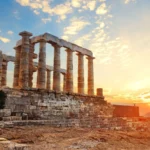
An 8-day Road Trip around the Peloponnese: A Road Trip Through History and Nature

The Peloponnese, a large peninsula in southern Greece, is a land where myth and reality intertwine, where ancient ruins stand proudly alongside breathtaking natural wonders, and where every twist and turn of the road reveals a new surprise. This comprehensive guide will take you on an unforgettable journey through this remarkable region, offering insights into its rich history, stunning landscapes, and must-see attractions that are best explored by car.
The Peloponnese: A Living Tapestry of History and Nature
Connected to the mainland by the narrow Isthmus of Corinth, the Peloponnese is a region steeped in legend and history. It’s the land where Hercules performed his labors, where the Olympian Gods played out their dramas, and where some of the most significant events in ancient Greek history took place. But the Peloponnese isn’t just about the past. It’s a vibrant mosaic of stunning landscapes, from rugged mountains and lush forests to pristine beaches and charming villages.
The beauty of exploring the Peloponnese by car lies in the freedom it offers. You can stop wherever your heart desires, venture off the beaten path, and truly immerse yourself in the local culture. This road trip will take you on a circular route around the Peloponnese, starting and ending in the bustling city of Patras, allowing for easy rental car pickup and drop-off.
The Route: A Journey Through Time and Terrain
Our circular route will cover the following legs:
- Patras → Olympia
- Olympia → Pylos
- Pylos → Kalamata
- Kalamata → Sparta
- Sparta → Nafplio
- Nafplio → Epidaurus
- Epidaurus → Corinth
- Corinth → Patras
This carefully curated itinerary ensures a diverse range of landscapes and historical sites, providing a comprehensive taste of what the Peloponnese has to offer. Let’s dive into each leg of the journey and discover the wonders that await.

Leg 1: Patras to Olympia – The Birthplace of the Olympic Games
Our adventure begins in Patras, Greece’s third-largest city and a vibrant hub of culture and commerce. As you leave the city behind, you’ll find yourself driving through the picturesque countryside of Western Greece. The road to Olympia is a visual feast, with rolling hills, olive groves, and vineyards stretching to the horizon.
After approximately two hours of driving, you’ll reach the crown jewel of this leg: Ancient Olympia. This UNESCO World Heritage site is where the Olympic Games were born in 776 BC. As you wander through the ruins, it’s easy to imagine the roar of the crowd as ancient athletes competed for glory.
Must-see spots in Olympia:
- The Temple of Zeus: Once home to one of the Seven Wonders of the Ancient World
- The Stadium: Where foot races were held
- The Archaeological Museum: Houses incredible artifacts, including the famous Hermes of Praxiteles statue
Pro tip: Visit early in the morning to beat the crowds and the heat. Bringing water is essential, as exploring ruins can be thirsty work.

Leg 2: Olympia to Pylos – Coastal Splendor and Medieval Mysteries
The drive from Olympia to Pylos takes you through some of the most stunning coastal scenery in Greece. As you wind your way along the roads of Messinia, breathtaking views of the Ionian Sea unfold before you.
A worthwhile stop along the way is the charming town of Kyparissia. Its beautiful old town, perched on a hill and crowned by a Frankish castle, provides the perfect spot for a lunch break. Be sure to try the local “sfela” cheese, a regional delicacy.
As you approach Pylos, the landscape becomes more dramatic. This area, known as Navarino Bay, was the site of a crucial naval battle in 1827 that led to Greek independence. Today, it’s renowned for its pristine beaches and crystal-clear waters.
Pylos itself is a picturesque town that seems to have stepped out of a postcard. The star attraction here is the Castle of Pylos, also known as Niokastro. This well-preserved fortress offers panoramic views of the bay and houses a small museum.
Don’t miss:
- Voidokilia Beach: A perfect omega-shaped beach often rated as one of the best in the world
- Palace of Nestor: The remarkably well-preserved Mycenaean palace, allegedly home to King Nestor from Homer’s Odyssey
- Gialova Lagoon: A paradise for birdwatchers and nature lovers
Insider tip: If visiting in August, try to catch the Sardine Festival in Pylos. It’s a lively celebration with plenty of free grilled sardines and local wine.
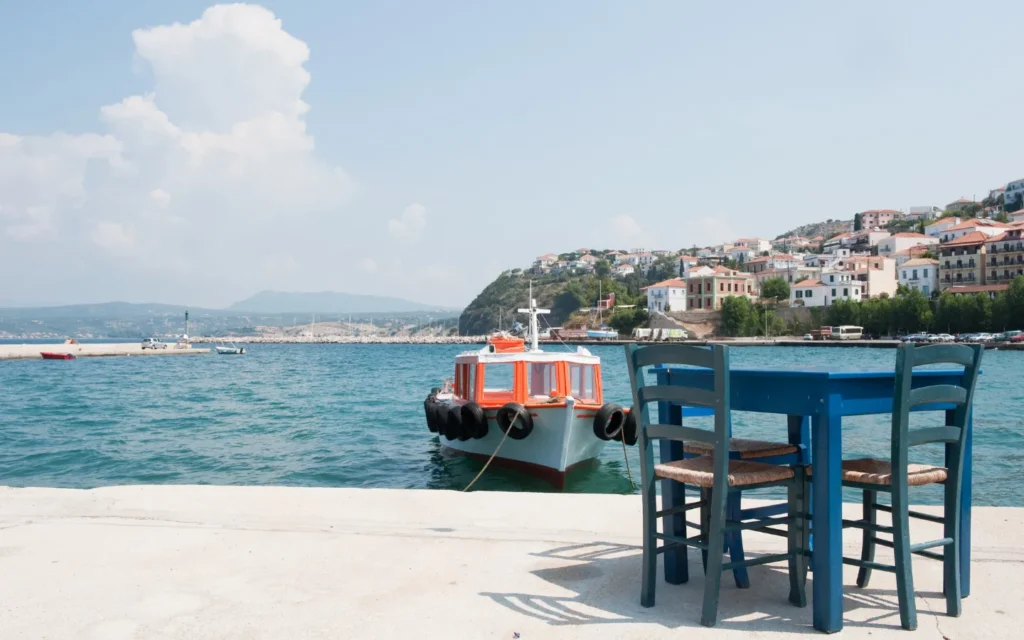
Leg 3: Pylos to Kalamata – From Ancient Ruins to Modern Delights
As we leave the charming town of Pylos behind, our next destination is Kalamata, the capital of Messinia and home to those famous olives we all know and love. Before reaching the city, there’s plenty to explore along the way.
A must-visit stop is Ancient Messene. This vast archaeological site is often overlooked by tourists, which means you can explore its well-preserved theater, stadium, and temples in relative peace. The site’s location, nestled in a valley surrounded by mountains, is truly spectacular. The Arcadian Gate, an impressive example of ancient military architecture, is particularly noteworthy.
As you continue your drive, you’ll pass through some of the most fertile land in Greece. This region is famous for its olive groves, and you’ll see plenty of them dotting the landscape. During the harvest season (usually November to January), you might even spot locals collecting olives using traditional methods.
Arriving in Kalamata, you’ll find a city that perfectly blends the old with the new. The historic old town, with its narrow streets and traditional architecture, contrasts beautifully with the modern waterfront area.
Must-do activities in Kalamata:
- Visit the 13th-century Castle of Kalamata for panoramic views of the city and sea
- Stroll along the bustling waterfront promenade
- Sample some Kalamata olives at the central market
- Take a dip at Kalamata Beach – a Blue Flag beach right in the city
Foodie tip: Kalamata is known for its cuisine. Try the local specialty “gournopoula” (suckling pig) and finish off with some “pasteli” (sesame seed and honey bars) for dessert.
Leg 4: Kalamata to Sparta – Through the Heart of the Peloponnese
Leaving the coastal charm of Kalamata behind, we head inland towards Sparta, the city of legendary warriors. This drive takes you through the heart of the Peloponnese, offering a dramatic change in scenery as we climb into the Taygetos Mountains.
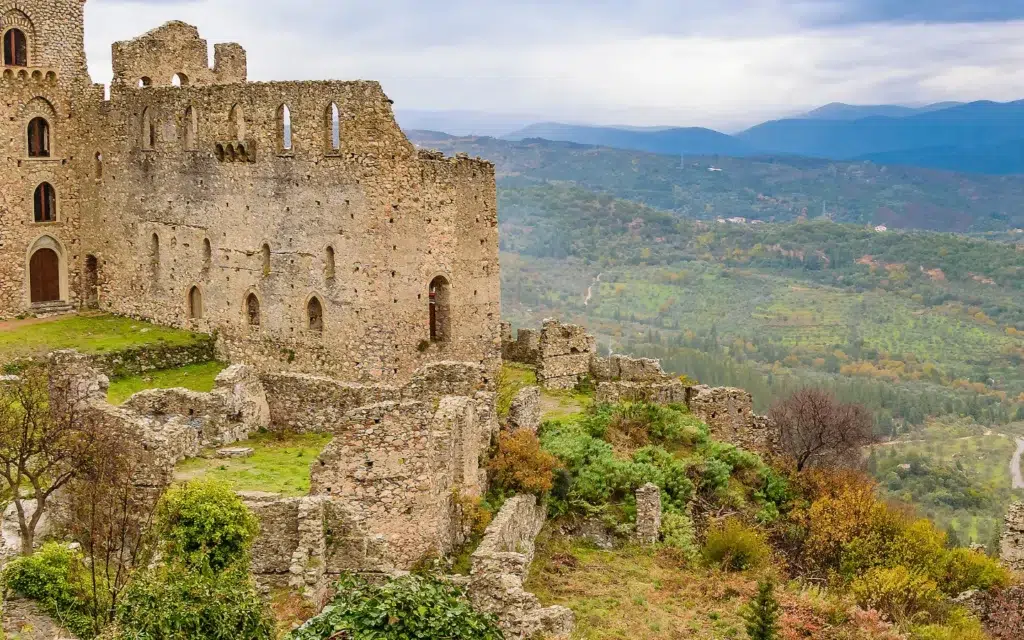
The road to Sparta is an adventure in itself. As you wind your way up the mountain passes, you’ll be treated to breathtaking views of deep gorges, dense forests, and quaint mountain villages. A must-stop along the way is the village of Mystras – a Byzantine ghost town that clings to the mountainside and offers a fascinating glimpse into medieval Greek life.
Sparta itself might not have the grand ruins you’d expect from such a famous ancient city, but it has its own unique charm. The modern town is built on the site of ancient Sparta, and while most of the ancient city is gone, there are still some interesting sites to explore.
Don’t miss in Sparta:
- The Acropolis of Sparta: While not much remains, the views are spectacular
- The Olive and Greek Olive Oil Museum: Learn about the history and production of Greece’s liquid gold
- The statue of King Leonidas: A tribute to Sparta’s most famous warrior
Adventure tip: For those up for a challenge, consider hiking part of the Taygetos mountain range. The E4 European long-distance path runs through here, offering trails for all levels of hikers.
Leg 5: Sparta to Nafplio – From Warrior City to Venetian Charm
As we bid farewell to Sparta, our next destination is the charming seaside town of Nafplio. But before we reach it, we have some incredible stops along the way.
First up is the ancient city of Tegea. This lesser-known archaeological site boasts a beautiful ancient theater and the Temple of Athena Alea, designed by the famous sculptor Scopas. It’s a great place to stretch your legs and soak in some more ancient Greek history without the crowds.
Continuing on, you’ll drive through the region of Arcadia, known for its stunning natural beauty. The landscape here is dotted with picturesque villages, each seemingly more charming than the last. Consider stopping in Tripoli, the capital of Arcadia, for a coffee break and a stroll around its lovely central square.
As you approach Nafplio, you’ll notice the landscape changing once again. The rugged mountains give way to gentler hills and finally to the sea. Nafplio itself is often called the most beautiful town in mainland Greece, and it’s easy to see why.
Must-see in Nafplio:
- Palamidi Fortress: Climb the 999 steps (or drive) for panoramic views of the town and sea
- Old Town: Wander through the narrow streets, admiring the Venetian architecture and colorful bougainvillea
- Bourtzi Castle: This small fortress on an islet in the harbor is Nafplio’s iconic landmark
- Cultural tip: Nafplio was the first capital of modern Greece, and it’s steeped in history. Consider taking a guided walking tour to truly appreciate the town’s rich past.

Leg 6: Nafplio to Epidaurus – A Journey into Ancient Healing and Drama
From the Venetian charm of Nafplio, we’re now heading to one of the most impressive and well-preserved ancient sites in Greece: Epidaurus. This relatively short drive takes you through the eastern part of the Argolis region, known for its citrus groves and beautiful coastline.
As you leave Nafplio, consider making a small detour to the Mycenaean citadel of Tiryns. This UNESCO World Heritage site is one of the finest examples of Mycenaean architecture, with its massive Cyclopean walls that seem to defy the laws of physics.
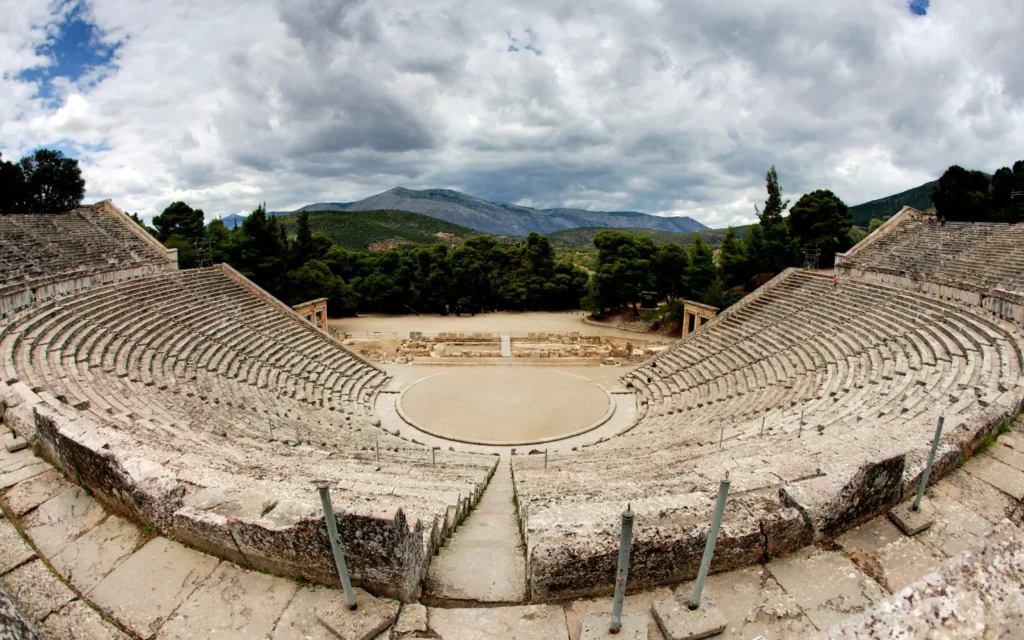
The ancient sanctuary of Asklepios at Epidaurus is a vast complex dedicated to Asklepios, the god of medicine, and served as a healing center in ancient times. But the real star of the show here is the ancient theater.
The Theater of Epidaurus is considered one of the purest masterpieces of Greek architecture. Its acoustics are so perfect that you can hear a pin drop on the stage from the highest seat. During the summer months, you might even catch a performance of an ancient Greek play in this incredible setting.
Don’t miss in Epidaurus:
- The Ancient Theater: Experience the remarkable acoustics for yourself
- The Archaeological Museum: Houses fascinating medical instruments and statues found at the site
- The Stadium: Less well-known than the theater but equally impressive
Insider tip: If visiting in summer, bring a cushion to sit on if you plan to watch a performance at the ancient theater. Those stone seats can get uncomfortable after a while!
Leg 7: Epidaurus to Corinth – Bridging Ancient Worlds
As we leave the healing sanctuary of Epidaurus behind, our journey takes us towards the historically significant city of Corinth. This drive offers a beautiful mix of coastal and inland scenery, with the Saronic Gulf on one side and the mountains of the Peloponnese on the other.
Along the way, make a stop at the charming seaside town of Loutraki. Known for its thermal springs, it’s the perfect place to take a relaxing break. Consider dipping your toes in the healing waters or enjoying a seafood lunch with a view of the gulf.
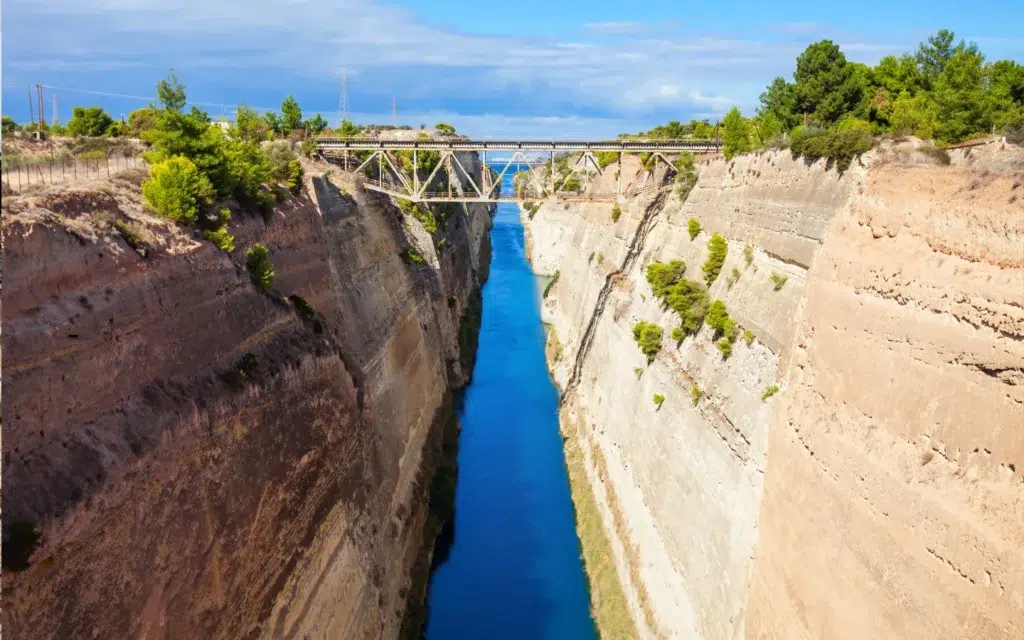
As you approach Corinth, you’ll cross the famous Corinth Canal. This narrow waterway, cut through solid rock, separates the Peloponnese from the Greek mainland. It’s an impressive feat of engineering, and there are several spots where you can stop to admire the view and maybe even see a ship passing through.
Ancient Corinth itself is a treasure trove for history buffs. Once one of the most important cities in ancient Greece, it was also significant in early Christianity, as evidenced by St. Paul’s letters to the Corinthians in the New Testament.
Must-see in Corinth:
- The Temple of Apollo: The most prominent landmark of ancient Corinth
- Acrocorinth: The acropolis of ancient Corinth, offering stunning views of the surrounding area
- The Archaeological Museum: Houses an impressive collection of artifacts from the area
Historical tidbit: Corinth was famous in ancient times for its locally produced bronze and its unique raisins, known as “currants” (a corruption of “Corinth”).
Leg 8: Corinth to Patras – Completing the Circle
As we embark on the final leg of our journey, we’re heading back to where we started – Patras. But there’s still plenty to see and do along the way!
Leaving Corinth, you’ll be driving along the southern coast of the Gulf of Corinth. This scenic route offers beautiful views of the water on one side and mountains on the other. Consider making a stop at the town of Diakopto to ride the Odontotos Rack Railway. This narrow-gauge railway climbs up the Vouraikos Gorge, offering spectacular views of the surrounding landscape.
As you continue westward, you’ll pass through Aigio, a town known for its production of black raisins. It’s a great place to stock up on some local products before heading back to Patras.
Arriving back in Patras, take some time to explore this vibrant city if you didn’t at the start of your journey. Visit the impressive St. Andrew’s Cathedral, stroll along the waterfront, or enjoy a meal in the charming old town.
The Peloponnese – A World of Wonders
This road trip through the Peloponnese offers a perfect blend of history, nature, and culture. From the ancient ruins of Olympia and Epidaurus to the medieval charm of Nafplio and the natural beauty of the coastline, every day of this journey brings new wonders to discover.
Traveling by car allows you to explore at your own pace, venture off the beaten path, and truly immerse yourself in the rich tapestry of the Peloponnese. Whether you’re a history buff, a nature lover, or a culinary enthusiast, this region has something to offer everyone.
Remember to drive safely, respect local customs, and take the time to interact with the warm and welcoming locals. Their stories and traditions are as much a part of the Peloponnese experience as the ancient ruins and beautiful landscapes.
As you complete your journey, you’ll carry with you not just memories of stunning vistas and remarkable historical sites, but also a deep appreciation for the enduring spirit of this incredible region. The Peloponnese is more than just a destination – it’s a journey through time, nature, and the very essence of Greek culture.