Driving in Athens and Beyond: A Comprehensive Guide for Visitors

Athens, the heart of Greece, is a city that seamlessly blends ancient history with modern vibrancy. While many visitors rely on public transportation, driving can provide unparalleled flexibility and the opportunity for exciting day trips. This comprehensive guide will help you navigate the streets of Athens and explore the surrounding areas with confidence, ensuring a memorable Greek adventure.
Driving in Central Athens
Understanding Athens’ Layout
Before diving into traffic conditions, it’s helpful to understand Athens’ basic layout:
- The city center is relatively compact, with most major attractions within walking distance.
- The Acropolis serves as a central landmark, visible from many parts of the city.
- Major avenues like Syngrou, Kifissias, and Mesogeion radiate outwards from the center.
- The city is surrounded by mountains on three sides, with the sea to the south.
Traffic Conditions
1. Peak hours:
Morning: 7:30-9:30 AM
Evening: 4:00-7:00 PM
The city center has restricted access on weekdays from 7:00 AM to 8:00 PM (known as the “Daktylios” or Ring).
Tip: If possible, avoid driving during these hours. Consider using the metro and combining it with short taxi rides. The metro is clean, efficient, and many signs are in English.
2. Major Avenues with Heavy Traffic:
- Kifissias Avenue: Often congested towards the city center in the morning and towards the northern suburbs in the evening. This avenue connects the city center to the affluent northern suburbs.
- Syngrou Avenue: Particularly busy during rush hours and weekends due to beachgoers. It connects central Athens to the southern coastal areas.
- Mesogeion Avenue: Frequently congested due to numerous hospitals and public services. It’s a major artery leading to the eastern suburbs.
- Pireos Street: Often busy, especially near Piraeus port. It’s the main road connecting Athens to its port.
Alternatives:
- For Kifissias, try Kymis Avenue or the National Road.
- For Syngrou, the coastal road (Poseidonos Avenue) might be a better option outside peak hours.
- For Mesogeion, consider using Katehaki Avenue as an alternative route.
3. One-Way Streets and Peculiarities:
- Many streets in the historic center (Plaka, Monastiraki) are narrow and one-way. These areas are better explored on foot.
- Panepistimiou and Stadiou are major one-way streets in the center, forming a loop with Akadimias Street.
- Be cautious of bus lanes, especially on Alexandras Avenue and Vouliagmenis Avenue. Driving in these lanes can result in hefty fines.
Tip: Use navigation apps like Google Maps or Waze for up-to-date information on one-way streets and traffic. These apps are particularly useful as street signs may be in Greek.
Parking in the Center
Parking in central Athens can be challenging, but there are several options:
1. Municipal Parking Areas:
- Syntagma (underground parking)
- Kotzia Square
- Kanigos Square
Cost: Usually €1.50 – €2.50 per hour, with reduced rates for longer durations.
2. Controlled Street Parking:
- Enforced in many central areas, usually from 9:00 AM to 9:00 PM.
- Maximum duration typically 3 hours.
- Cost: About €1 – €1.50 per hour, depending on the area.
How it works: Purchase a parking card from kiosks or use the myAthensPass app. Look for blue lines on the road indicating paid parking areas.
3. Private Parking Lots:
- Numerous in the center, especially near commercial streets.
- Generally more expensive than municipal areas but offer security and convenience.
- Expect to pay around €3-5 per hour in most central locations.
4. Parking Apps:
myAthensPass: For paying controlled street parking.
ParkAround: Find and book spots in private parking lots.
Tip: Always check parking signs carefully. Some areas have resident-only parking, and parking illegally can result in your car being towed.
Tips for Safe Driving in Athens
- Watch for Motorcycles: They often weave between lanes and may appear suddenly.
- Respect Pedestrians: Many Athenians cross streets outside designated crossings. Stay alert, especially in busy areas.
- Be Cautious of Public Transport: Buses and trolleys have priority on many streets. Never drive in bus lanes.
- Patience is Key: Traffic can be frustrating, but aggressive driving increases accident risk. Greeks can be expressive drivers; don’t take honking personally.
- Know the Low Emission Zones: The city center restricts access for older vehicles. Check if your rental car is compliant.
- Roundabouts: These are becoming more common in Athens. Remember to give way to vehicles already in the roundabout.
- Speed Limits: Generally 50 km/h (31 mph) in the city, unless otherwise posted. Speed cameras are increasingly common.
Alternative Transportation in the Center
- Park and Ride: Park at metro stations in the suburbs (e.g., Doukissis Plakentias, Elliniko) and continue by metro. This is often the most convenient way to reach the city center.
- Shared Bikes and Scooters: Services like Bike Sharing Athens offer alternatives for short trips in the center. Download the app before your trip.
- Taxis and Ride-Sharing: Apps like Beat and Uber are available in Athens. Taxis are relatively inexpensive compared to other European capitals.
- Public Transportation: Athens has an extensive bus, trolley, and metro network. The metro, in particular, is modern, clean, and easy to navigate for non-Greek speakers.
Day Trips Around Athens
Driving outside Athens offers the opportunity to explore Greece’s diverse landscapes and rich history. Here are some popular day trips:
1. Sounion and the Temple of Poseidon
Distance from Athens: About 70 km (43 miles)
Driving Time: 1-1.5 hours
Route:
- Take Syngrou Avenue south out of Athens.
- Continue onto the coastal road (Poseidonos Avenue).
- Follow the scenic coastal road through the Athens Riviera.
What to See:
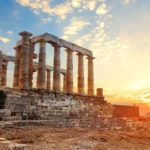
- Temple of Poseidon: A stunning ancient Greek temple perched on a cliff overlooking the Aegean Sea. Visit ideally just before sunset for breathtaking views.
- Sounion Beach: A beautiful organized beach, perfect for swimming in the crystal-clear waters.
- Sounion National Park: Offers hiking trails and exploration of local flora and fauna.
Tips:
- Start early to avoid traffic on Syngrou Avenue and Poseidonos Avenue.
- Stop at Varkiza or Saronida for coffee with a sea view. These coastal towns offer a glimpse of local life.
- There’s parking near the archaeological site, but it fills up quickly in summer months.
- Bring water, sunscreen, and comfortable shoes. The site is exposed with little shade.
Food and Accommodation:
- Try fresh fish at tavernas on Sounion beach or in nearby Lavrio. Look for “psarotavernas” for the best seafood.
- For overnight stays, there are several hotels and guesthouses in the area, ranging from budget to luxury options.

2. Delphi
Distance from Athens: About 180 km (112 miles)
Driving Time: 2.5-3 hours
Route:
- Take the Athens-Lamia National Highway (A1) north.
- Exit towards Livadia/Delphi.
- Follow the winding road through picturesque countryside to Delphi.
What to See:
- Delphi Archaeological Site: Once considered the “navel of the world,” this UNESCO World Heritage site includes the Temple of Apollo, ancient theater, and stadium.
- Delphi Museum: Houses important findings from the archaeological site, including the famous Charioteer of Delphi.
- Arachova Village: A picturesque mountain town known for its winter sports, traditional textiles, and cheese.
Tips:
- Start very early in the morning to have enough time in Delphi. The site is vast and deserves at least 3-4 hours.
- The route passes through the Athens-Lamia National Highway. Be prepared for tolls (around €15 one way).
- If you have time, make a stop at the Hosios Loukas Monastery, a beautiful Byzantine church near Delphi.
- Wear comfortable shoes for walking on uneven terrain at the archaeological site.
Food and Accommodation:
- Try local specialties like formaela cheese and grilled lamb in the tavernas of Delphi or Arachova.
- For accommodation, choose between traditional guesthouses in Delphi or luxury hotels in Arachova if you decide to stay overnight.

3. Nafplio
Distance from Athens: About 140 km (87 miles)
Driving Time: 2 hours
Route:
- Take the Athens-Corinth National Highway (A8).
- After Corinth, continue on the Corinth-Tripoli Highway (A7).
- Exit towards Nafplio.
What to See:
- Palamidi Fortress: An imposing Venetian castle offering panoramic views of Nafplio and the Argolic Gulf.
- Bourtzi: A small island-fortress in the harbor, accessible by boat.
- Old Town: Wander through picturesque alleys, Syntagma Square, and admire the neoclassical architecture.
- Archaeological Museum: Housed in an impressive Venetian building, showcasing artifacts from the region.
Tips:
- The route is easy via the Athens-Corinth National Highway. Watch for tolls.
- Stop at the Corinth Canal for a quick break and photos. It’s an impressive engineering feat.
- To reach Palamidi, you can drive up or try the 999 steps for a more athletic approach.
- Nafplio is ideal for an overnight stay if you want to make it a weekend trip.
Food and Accommodation:
- Try local sweets like sukoutz at traditional pastry shops.
- There are many accommodation options, from boutique hotels in the Old Town to large resorts on the outskirts.

General Tips for Driving Outside Athens
1. Car Preparation:
- Check oil, water, brakes, and tires before any long trip.
- Ensure you have a spare tire and necessary tools.
- In summer, check the air conditioning system. Greek summers can be intensely hot.
2. Navigation and Apps:
- Use apps like Google Maps or Waze for real-time traffic updates.
- Download offline maps for areas with poor signal, especially in mountainous regions.
- Consider renting a GPS unit with your car if you’re not comfortable relying on your phone.
3. Tolls:
- Always have cash for tolls. Not all booths accept cards.
- Alternatively, get an e-pass for quicker passage. Ask your rental car company if they provide one.
- Toll prices vary, but budget about €15-20 for an Athens-Delphi trip (one way).
4. Refueling:
- Fill up your tank before getting on the highway. Gas stations on highways are usually more expensive.
- Use apps like Fuelprices.gr to find the cheapest gas stations on your route.
- In remote areas, don’t let your tank get too low. Gas stations can be far apart.
5. Safety:
- Take a break every 2 hours, especially if you’re the only driver.
- Avoid driving at night in unfamiliar areas, especially on mountain roads.
- Always carry water, especially in summer. Dehydration is a real risk in the Greek heat.
- Be prepared for sudden weather changes, especially in mountainous areas.
6. Parking in Tourist Destinations:
- In popular destinations, arrive early to easily find parking.
- Prefer organized parking areas for greater security.
- Never leave valuables visible in the car. Use the trunk or take them with you.
7. Local Rules and Customs:
- In small villages, the pace of life is more relaxed. Adjust your driving accordingly.
- On islands, watch out for animals on the road, especially in rural areas.
- Be prepared for narrow roads in villages and islands. Renting a smaller car can be advantageous.
8. Emergencies:
- Save the number for road assistance on your phone.
- In case of an accident, 112 is the pan-European emergency number.
- Always carry necessary documents: driver’s license, vehicle registration, and insurance papers.
- Consider getting travel insurance that covers driving in Greece.
Understanding Greek Road Signs
While many road signs in Greece are similar to those in other European countries, some unique signs and conventions are worth noting:
1. Language
Most signs use Greek and English, but some may be in Greek only, especially in rural areas.
2. Speed Limits
- White circular signs with red borders indicate speed limits.
- Default limits: 50 km/h in towns, 90 km/h on open roads, 120 km/h on highways.
3. Direction Signs:
- Blue signs indicate motorways.
- Green signs are for national roads.
- White signs are for local roads.
4. Place Names:
- Major destinations are often written in both Greek and Latin alphabets.
- Regional place names might only be in Greek. Familiarize yourself with the Greek alphabet for easier navigation.
5. Unique Signs:
- “STOP” is used as in English-speaking countries.
- “ΠΑΡΑΧΩΡΗΣΗ ΠΡΟΤΕΡΑΙΟΤΗΤΑΣ” means “Yield” or “Give Way”.
6. Parking Signs:
- A blue “P” indicates parking is allowed.
- A blue “P” with an “X” through it means no parking.
Understanding these signs will help you navigate more confidently and avoid unintentional traffic violations.
Cultural Tips for Driving in Greece
- Driving Style: Greek drivers can be more aggressive than what you might be used to. Stay calm and defensive.
- Horn Usage: Honking is common, often used as a form of communication rather than aggression.
- Overtaking: Be prepared for cars to overtake in seemingly risky situations. Stay in your lane and drive predictably.
- Scooters and Motorcycles: These are very common and often weave through traffic. Always check your blind spots.
- Pedestrians: In cities, pedestrians often cross roads at will. Stay alert, especially in busy areas.
- Gas Station Etiquette: In many places, attendants will fill your tank. It’s polite to round up the bill slightly as a tip.
- Road Trips: Greeks love impromptu stops. Don’t be surprised to see cars pulled over at scenic spots for photos or picnics.
Driving in Athens and the surrounding areas can be an exciting and rewarding experience if you’re well-prepared. With the right preparation, patience, and respect for local traffic rules and customs, you can enjoy safe and comfortable trips that allow you to see a side of Greece many tourists miss.
Whether you’re navigating the bustling streets of Athens, winding along coastal roads to Sounion, climbing the mountains to Delphi, or exploring the charming alleys of Nafplio, driving gives you the freedom to discover Greece at your own pace.
Remember, every journey is an opportunity to immerse yourself in Greek culture and landscape. Enjoy the ride, respect the environment and your fellow travelers, and above all, drive safely. As the Greeks would say, “Kalo taxidi” (have a good trip) and happy exploring!
Ready to explore Greece on your own terms? Book your car rental with Hellas Car for competitive rental rates and a wide selection of vehicles perfect for your Athens adventures.